Thermo Fisher Scientific: growth and sustainability
At the Brainport campus in Eindhoven, Thermo Fisher Scientific builds the most advanced electron microscopes in the world. The campus has doubled in size over ten years, and so has its energy demand. The ambition is to keep growing without depending on fossil fuels, and without compromising on reliability, continuity, or production.

The energy approach behind growth and sustainability
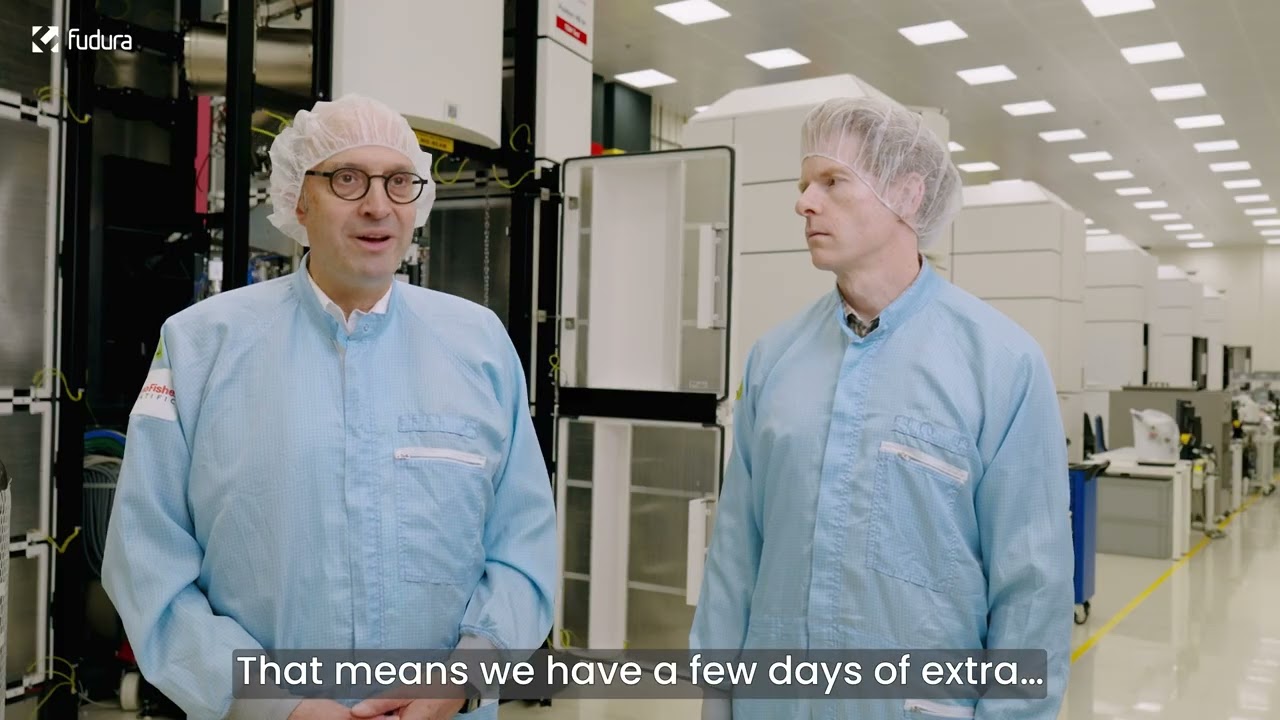
Thermo Fisher's story is part of The Energy Future of the Netherlands. In this episode, Darren Willman (Sustainability Program Leader) and Steve Reyntjens (VP & General Manager, Life Sciences) take us inside the energy operation that keeps the business running. From around-the-clock cleanrooms to one of Brainport's largest battery systems, and the ambitions still ahead.
The challenge
At a high-tech location like this, energy security, intelligent energy management and room for expansion are crucial. Especially at a time when grid congestion increasingly plays a role.
Thermo Fisher Scientific's Eindhoven campus has grown significantly over the past ten years. And energy demand has grown along with it. Electron microscopes are built and tested in cleanrooms. Extremely controlled rooms where even the smallest disruption can affect quality, planning, and continuity. These cleanrooms run day and night, so power outages have a direct impact on the production process. Steve Reyntjens, VP & General Manager Life Sciences, explains that if the power goes out, it takes them several days to get everything back on track. Which is why a reliable and continuous energy supply is essential for them.
Fudura helped Thermo Fisher Scientific by building an energy supply that is more reliable, smarter, and future-ready.
Solar panels, energy storage, and energy management
To bring growth and sustainability together, Thermo Fisher Scientific relies on a combination of smart energy solutions: commercial solar panels on the campus, data insights for energy management, and one of the largest battery systems within the Brainport area.
This allows sustainably generated energy to be used more effectively. And lets the campus manage available capacity more intelligently. The battery stores energy at the right time and deploys it when demand rises. It charges at night when the grid has more energy availabilty. And it delivers power supply during the day when demand peaks. The battery makes the Thermo Fisher Scientific campus more resilient, reduces peak load, and makes sustainable energy more usable.
“For us, growth and sustainability go hand in hand. Delivering more and more to our customers, without growing our footprint.”

Prepared for the future
Thermo Fisher Scientific has a global ambition to become less dependent on fossil fuels. At the Eindhoven campus, that ambition takes concrete shape through investments in sustainable energy and smart energy infrastructure.
At the same time, the company is looking at further strengthening its energy system. For example with additional solar panels, heat pumps, and expansion of energy infrastructure. Ensuring that the energy supply keeps developing in line with the campus's growth and sustainability goals, and with a future in which flexibility on the power grid becomes increasingly important.

Feeling the need for more control over energy security and growth?
Fudura helps companies and governmental bodies gain control over energy, continuity, and sustainability. From insight and energy management to building a future-proof energy infrastructure. Our experts are happy to think along with you.
Request a free consultation.
Request a free consultationFrequently Asked Questions
What are 4 examples of sustainable energy?
Sustainable energy is generated from sources that don't run out and place less burden on the environment than fossil fuels. Common forms include solar energy via solar panels, wind energy via wind turbines, hydropower from flowing water, and biomass from organic material such as wood and plant residue.
For businesses, solar energy is often the most accessible starting point. Fudura helps organizations make smart use of sustainably generated energy: from installation to optimal use through energy storage and energy management.
Can sustainable energy run out?
Sun, wind, and water don't run out. They are continuously replenished by natural processes. But availability varies. No sun, less generation. No wind, less output. That's why smart storage is crucial. With battery systems, you store energy when there's a surplus and use it when demand rises. This keeps the energy supply stable, even when the sun isn't shining.

Smart energy innovation for Van der Spek

Optimal infrastructure for Glanerbrook
